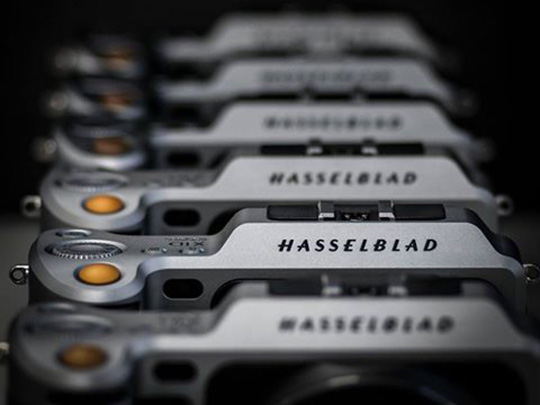
Every Leica M since 1954 has centered on the rangefinder patch — the little split-image window that's the whole reason people either love or never understand the system. The M EV1 removes it. In its place is a 5.76-million-dot OLED electronic viewfinder, 0.76x magnification, 100% frame coverage, with focus peaking, magnification, and digital zoom frame lines layered on top. It's the first M in the line's history that lets you see exactly what the sensor sees before you press the shutter.
That sensor is new too: a 60.3MP BSI chip that can output at full 60MP, or downsample in-camera to 36MP or 18MP, each using the entire sensor area rather than cropping. Dynamic range is rated at 15 stops. Battery life, unusually for an EVF-equipped mirrorless camera, actually holds up reasonably well — Leica quotes 237 shots through the viewfinder, which sounds modest until you compare it to most other EVF cameras in this class.
What the M EV1 still refuses to do is autofocus. Every M lens ever made mounts and meters correctly, but focusing remains entirely manual, now aided by focus peaking rather than a mechanical rangefinder patch — no IBIS, no video, and no image stabilization of any kind. Battery life, while good for an EVF body, is still short of a standard M with an optical finder, and the fixed rear screen doesn't tilt. In low light, the EVF's frame rate visibly drops and can show a "jello" rolling effect that's distracting when panning.
At $8,995 body-only, it's priced like every M, and it will divide the M faithful the way every real change to this line always has. What it isn't is a compromise EVF bolted onto an old design — it's a genuinely new way to use M lenses, built for photographers who want the M system's optics without needing to learn rangefinder focusing to use them.