 Insta360 Just Dropped the X6, and It's Not Playing It Safe
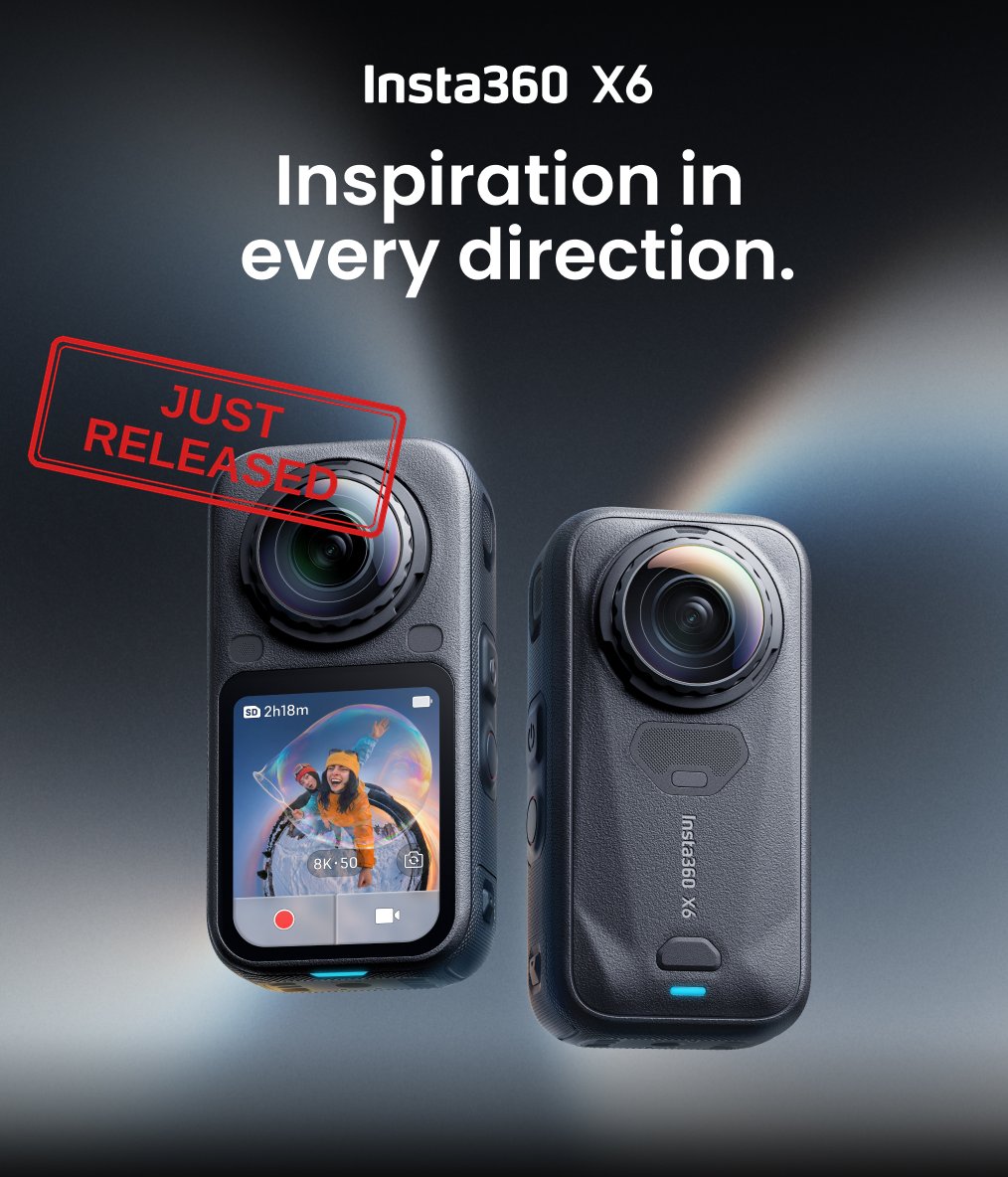
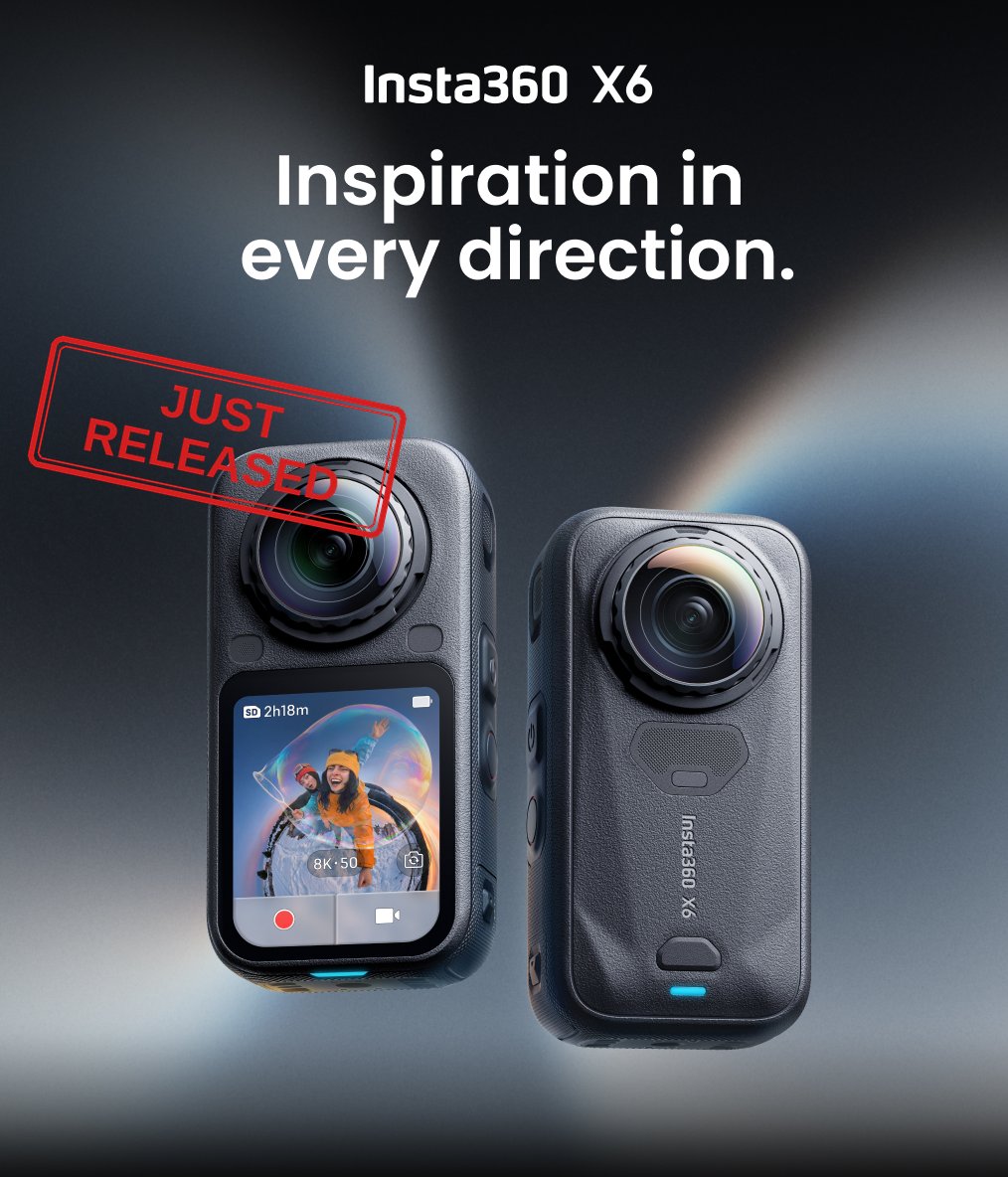
There's a certain kind of pressure that comes with hitting a milestone anniversary while also sitting on top of your entire market. You can't just ship something fine. Insta360 has spent ten years building 360 cameras, currently owns something like 71% of that market, and today it unveiled the X6 — the camera it's calling the biggest leap the X series has ever taken. That's a bold thing to say about your own product. Having looked through what's actually inside it, it's hard to argue with them.
The thing everyone actually wanted: better low light
Let's be honest about why most people upgrade a 360 camera. It's rarely about daytime shots — those already look great on last year's model. It's the dim bar, the sunset shoot, the indoor concert where everything comes out grainy and a little sad. That's exactly the problem Insta360 aimed the X6 at.
The camera moves to dual 1-inch-equivalent custom Sony sensors, a real jump up from the smaller 1/1.28-inch sensors in the X5. Bigger sensors mean more light hitting the chip, and more light is the difference between footage you're embarrassed to post and footage you're proud of. They've paired that with a new low-light mode — two ambient light sensors working specifically to cut flicker and dig detail out of dark scenes — plus something called AdaptiveTone 2.0, where each lens meters itself independently and grabs two exposures per frame. Translation: shooting into a sunset, or under some venue's terrible mixed lighting, should look a lot less like a compromise now.
There's a serious brain behind all of this
Here's where it gets a little nerdy, but stay with it, because the numbers are genuinely surprising. The X6 runs on a triple AI chip setup — one 8-core, 3.3GHz, 4nm processor working alongside two dedicated imaging chips. Insta360 says that adds up to 500% more computing power than the X5, a 106% faster clock speed, and — this is the part that shouldn't really be possible — 35% lower power draw at the same time.
Normally more power means more battery drain. Getting both at once is the kind of engineering flex companies love to talk about and rarely actually deliver. If it holds up once real footage starts rolling in, that's a quietly impressive achievement buried under a lot of spec-sheet noise.
Also worth knowing: the X6 is the first 360 camera with native in-camera Dolby Vision. If you edit and color grade seriously, that's not a throwaway line — it means richer color and dynamic range captured right at the source, instead of something you're fighting to rescue afterward.
What it shoots, and what it costs you
Full 360 mode tops out at 8K/50fps. Not quite the 8K/60 some of the early leaks were hoping for, but still plenty for smooth slow-motion. Battery life in 8K mode is rated up to 140 minutes, which should mean fewer shoot days getting cut short right when things get good.
Now, the number that'll actually make you wince a little: $699.99 for the Standard Bundle, $799.99 for Essentials. That's $150 more than the X5's $549 starting price — about a 27% bump. Whether that stings depends entirely on how much the old low-light limitations were actually bothering you. If grainy night footage was the one thing holding your setup back, the sensor upgrade alone might be worth the extra cost.
Insta360's softening the blow a little for early buyers, too — activate an X6 before September 30 and you get a full year of Insta360+ Premium cloud storage at 500GB, plus three months of their Moments Pro editing tool, free. There's also a 90-day replacement policy for launch buyers, and their trade-in program is still around if you want your old camera to chip in toward the new one.
Why now, specifically
This launch isn't happening in isolation. DJI is releasing the Osmo 360 II just one day later in China, with no confirmed global date yet. Insta360 launching the X6 worldwide on day one — ahead of DJI's international rollout — feels less like coincidence and more like a company that knows exactly who's coming up behind them and wants to make sure nobody gets a clean shot at the lead.
Worth it?
This doesn't feel like a small, safe refresh wearing a big anniversary label. The sensor jump, the chip overhaul, and Dolby Vision support genuinely add up to something that plays like the real deal. You'll pay more than you did for the X5. But if low light has been the thing nagging at you every time you reviewed footage, the X6 looks like the camera that finally puts that complaint to rest.
— The fyiCams Team